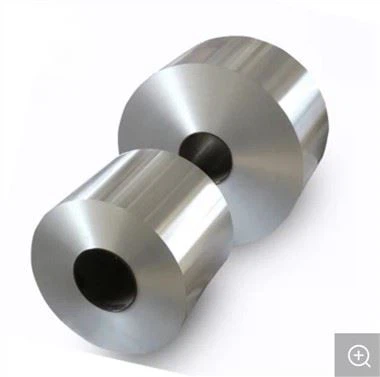
What is aluminum foil? What are the classifications of aluminum foil?
Nov 22, 2022
What is aluminum foil? What are the classifications of aluminum foil?
There are many classifications of aluminum foils, and different aluminum foils have different functions. The following simple classifications are made for aluminum foil, which can be classified according to the thickness, shape, state or material of aluminum foil.
Aluminum foil can be divided into thick foil, single zero foil and double zero foil according to thickness difference.
1. Thick foil: foil with thickness of 0.1~0.2mm.
2. Single zero foil: foil with thickness of 0.01mm and less than 0.1mm.
3.Double zero foil: the so-called double zero foil refers to the foil with two zeros after the decimal point when its thickness is measured in mm, usually the aluminum foil with thickness less than 0.0075mm. When expressed in English, thick foils are called "heavy gauge foils", single zero foils are called "medium gauge foils", and double zero foils are called "light gauge foil". In foreign countries, aluminum foil with thickness ≤ 40ltm are sometimes called light gauge foil, while aluminum foil with thickness>40btm are collectively called heavy gauge foil.
Aluminum foil can be divided into roll aluminum foil and sheet aluminum foil according to shape. Most of the aluminum foil deep processing wool is supplied in rolls, and only a few handicraft packaging occasions use sheet aluminum foil.
Aluminum foil can be divided into hard foil, semi hard foil and soft foil according to the state.
1. Hard foil: The aluminum foil that has not been softened (annealed) after rolling. When it is not degreased, there is no residue on the surface. Therefore, the hard foil must be degreased before printing, laminating and coating. If it is used for forming, it can be directly used.
2. Semi hard foil: Aluminum foil with hardness (or strength) between hard foil and soft foil, usually used for forming.
3. Soft foil: The aluminum foil that has been fully annealed and softened after rolling. The material is soft and there is no residual oil on the surface. At present, soft foil is used in most application fields, such as packaging, composite, electrical materials, etc.
According to the surface state, aluminum foil can be divided into one side light (single side light) aluminum foil and two side light (double side light) aluminum foil.
1. One side polished aluminum foil: The aluminum foil rolled by double rolling is bright on one side and dark on the other side after being rolled. Such aluminum foil is called one side polished aluminum foil. The thickness of one side polished aluminum foil shall not exceed 0.025mm.
2. Two sided polished aluminum foil: single rolled aluminum foil, with two paintings in contact with the roll. Due to different surface roughness of the roll, two sides of the aluminum foil can be divided into mirror faced two sided polished aluminum foil and ordinary two sided polished aluminum foil. The thickness of two-sided polished aluminum foil is generally not less than 0.01mm.
Aluminum foil can be divided into plain foil, embossed foil, composite foil, coated foil, colored foil and printed foil according to the added state.
1. Plain foil: Aluminum foil that is rolled without any other processing, also called light foil.
2. Embossed foil: Aluminum foil with various patterns on the surface.
3. Composite foil: composite aluminum foil formed by sticking aluminum foil with paper, plastic film and cardboard.
4. Coated foil: aluminum foil coated with various resins or paints.
5. Colored aluminum foil: aluminum foil with single color is coated on the surface.
6. Printed aluminum foil: aluminum foil printed on the surface to form various patterns, patterns, characters or pictures can be one color, up to 12 colors.
Aluminum foil has a series of advantages, such as light weight, airtight and good coverage, so it has been widely used in many sectors of the national economy and people's daily life. However, at present, it is mainly used in food packaging, cooking, electromechanical and construction fields.